

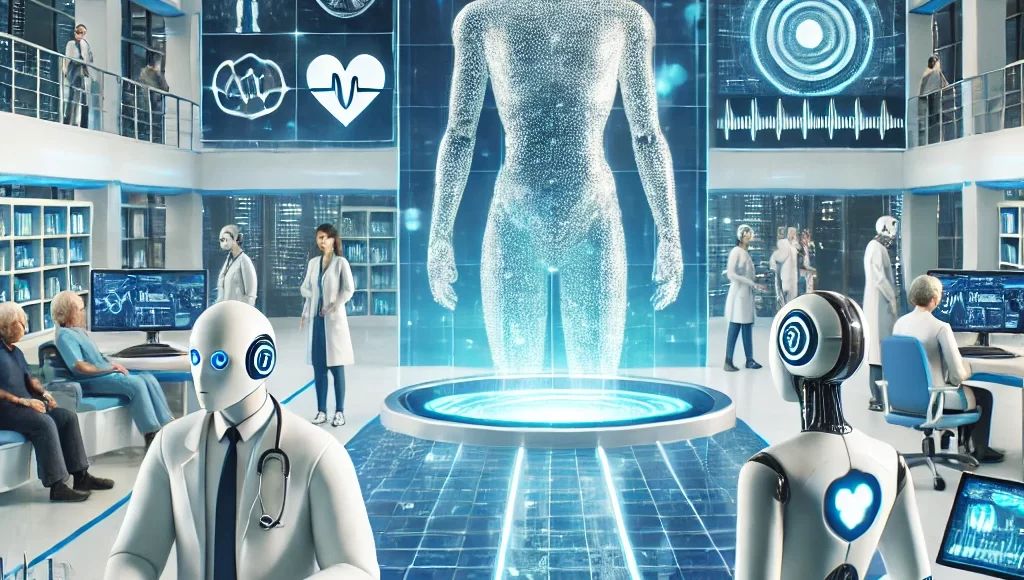
How AI is Transforming Healthcare in 2025
The healthcare industry is undergoing a technological revolution, and AI and healthcare are at the forefront of this transformation. In 2025, artificial intelligence is reshaping diagnostics, treatment, and patient care, making healthcare more efficient, accessible, and personalized. Let’s explore how AI is revolutionizing healthcare and what the future holds for this rapidly evolving field.
AI-Driven Diagnostics: Faster and More Accurate
One of the most significant impacts of AI and healthcare is in diagnostics. AI-powered algorithms analyze medical images, lab results, and genetic data with remarkable speed and accuracy. In 2025, AI-driven diagnostic tools assist doctors in detecting diseases such as cancer, heart disease, and neurological disorders earlier and more precisely than ever before.
- Medical Imaging: AI systems analyze X-rays, MRIs, and CT scans to detect abnormalities, reducing human error and expediting diagnoses.
- Genetic Testing: AI examines genetic markers to identify predispositions to hereditary conditions, enabling early intervention.
- Pathology Analysis: AI processes biopsy samples faster, providing quick and reliable results to pathologists.
AI-Powered Personalized Medicine
Another major advancement in AI and healthcare is the development of personalized medicine. AI analyzes patient history, genetic information, and real-time health data to tailor treatments to individual needs.
- Precision Treatments: AI identifies the most effective treatment options based on a patient’s genetic makeup and lifestyle factors.
- Predictive Analytics: AI predicts disease progression and recommends preventative measures.
- Drug Discovery: AI accelerates pharmaceutical research by identifying potential drug candidates and optimizing clinical trials.
Virtual Health Assistants and Telemedicine
AI-powered virtual health assistants and telemedicine platforms have become indispensable in 2025. These intelligent systems improve patient engagement, streamline healthcare delivery, and expand access to medical services.
- 24/7 AI Chatbots: Virtual assistants provide immediate answers to medical queries, reducing unnecessary hospital visits.
- Remote Monitoring: AI-enabled devices track vital signs and notify doctors of irregularities.
- Telehealth Expansion: AI optimizes telemedicine consultations, ensuring patients receive accurate diagnoses and treatment recommendations.
AI in Robotic Surgery and Rehabilitation
Surgical precision and rehabilitation have improved significantly with AI-driven robotics. These innovations enhance patient outcomes and reduce recovery times.
- AI-Assisted Surgeries: Robotic systems guided by AI improve precision, reducing risks in complex procedures.
- Smart Prosthetics: AI-powered prosthetic limbs offer better mobility by adapting to user movements.
- Rehabilitation Support: AI monitors patient recovery and recommends personalized rehabilitation programs.
AI-Enabled Administrative Efficiency
Beyond direct patient care, AI is revolutionizing administrative processes in AI and healthcare by reducing paperwork, optimizing workflows, and enhancing hospital management.
- Automated Documentation: AI transcribes and organizes patient records, minimizing errors and improving efficiency.
- Smart Scheduling: AI optimizes appointment bookings to reduce wait times.
- Fraud Detection: AI detects anomalies in billing and insurance claims, preventing fraudulent activities.
Ethical Considerations and Future Challenges
Despite its numerous benefits, the integration of AI and healthcare presents challenges, such as data privacy, algorithmic bias, and ethical concerns surrounding AI decision-making.
- Data Security: Safeguarding patient data against cyber threats is a priority.
- Human Oversight: Ensuring AI complements, rather than replaces, human expertise is essential.
- Regulatory Compliance: Governments and healthcare organizations are working on policies to govern AI use in medicine.
Conclusion
The synergy between AI and healthcare in 2025 is transforming the medical field, improving patient outcomes, streamlining administrative tasks, and making healthcare more accessible. As AI continues to evolve, its role in diagnostics, treatment, and patient care will only expand, ushering in a new era of precision medicine and healthcare efficiency. With continued research, ethical considerations, and regulatory frameworks, AI will continue to revolutionize healthcare for years to come.